This is basically alt-fiction. Lucifer rebelled because he wanted to rule as a god our of pride and personal ambition. The enemy of your enemy is not your friend, but because a lot of people have a problem with the Bible’s fiction and how its cult acts it out, they like to indulge in this alt-fiction that Satan was essentially just another Prometheus. Why not just disengage from the entire fictional premise completely rather than pick one which deliberately antagonizes and plays into your critics?
I know everything about everything but first I’m going to make this Earth simulation to see how you behave since I don’t know yet. And then I will make decisions based on this information that I didn’t know even though I knew it.
this bug was replaced with new in Islam !
“Is God willing to prevent evil, but not able? Then he is not omnipotent.
Is he able, but not willing? Then he is malevolent.
Is he both able and willing? Then whence cometh evil?
Is he neither able nor willing? Then why call him God?”Then whence cometh evil?
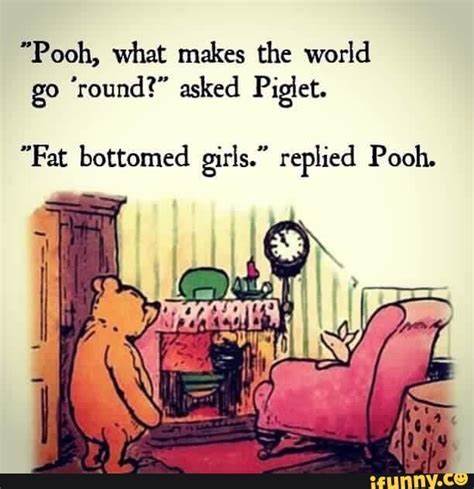
Read the comic lol
Whoever originally wrote this, I want to be their friend! Thank you for sharing. It’s beautiful.
I think they’re called the Epicurean paradoxes because Epicurus originally stated them.
i think the common argument for this (not that i agree with it) is that God just see evil differently? i.e. you mere mortals think something is evil doesn’t mean god does too.
(and this argument then becomes circular and unfalsifiable, that’s why i think it’s dumb).
God’s a Taoist. There is no good, there is no evil. There is only his way, or the highway.
What do the morals of ants mean to man?
Not currently religious, but my understanding at the time was not that he didn’t think things could be evil, though obviously we might see things like death as “evil” and he might not. It’s that in order for us to “deserve” good things, we need to prove we are worthy. The only way to prove that is to allow us to do the wrong thing so that we can of our own free will choose the right thing instead. The question would then be why would you create beings with free will knowing some of them will inevitably suffer forever and the answer is generally “I’m god, who the heck are you to question me?” or some stupid explanation about how free will existing is itself a good that god did and therefore even if we choose evil every time we make a choice we are still engaging in a universal “good”. Religions do obviously differ though, so everyone likely learned things a little differently.
The problem is when you think about free evils (evils that suppose no possible learning opportunity or some bullshit lile that).
Also, other problem is that, why would he create an infinite pain place for when we make decisions he doesn’t like?
There’s this explanation that the point is we’re the ones creating that eternal punishment with our actions, that’s what logically follows from rejecting its “love”; but, not to mention that then it’s completely toxic, completely egomaniacal, narcissistic, pathologically jealous, and psychopathic love, the biggest problem is, who’s supposed to have created logic and set up which causes produce which effects and what logically follows from what, according to religion? Right. “god”.
thanks for elaborating! i’ve never been religious so i only have a surface understanding of these stuffs. and honestly i kinda dislike it when fellow atheists throw out the “bUt wHAt abOUt eVil?” as the gotcha to try to prove that religions cannot be logical. but generally speaking religions can be logical and quite self-consistent in fact, and the question ultimately will be “what do you believe” which can’t be empirically tested anyway.
What about aggressive cancer in young children?
Couldn’t they be rewarded accordingly in the afterlife?
Does that absolve evilness?
God made them wrong, as a joke
not all tragedies occur because of evil
Why put an argument you know is bad? If God isn’t good by our subjective metric, he isn’t good
Is he able, but not willing? Then he is malevolent.
That’s a huge leap.
My coworkers smoke. I could take away their cigarettes and put them in the trash. Am I malevolent for not doing so?
If I did, I would be considered malevolent for infringing on their personal freedom.
It depends on who has power over who … you don’t have power or control over your coworker … they could slap you in face for taking away their cigarettes … and if they are strong and violent enough, they could punch you in face and knock you out
God may or may not have power over us and if they did, they’d snap their fingers and put us out of existence … which is why the paradox makes you think … if God is all powerful, why don’t they do things to make things better … because if they don’t, then they don’t care … and if they can’t, why call them God?
Or God is just an extreme emotion masochist
I also like the thought that God might also be a child who just accidentally created everything, didn’t know and just forgot about everything.
Our reality might be just a forgotten game save by a kid who has played and is continuing to play endless game files
In this scenario, who’s performing an evil act if you’re not wrong to stop it? The smokers?
I’ve been a smoker. The kind of damage I have been inflicting on myself over decades of smoking is crazy. The addiction makes you ignore a lot of warning signs.
So I guess my comment stems from the situation I find myself in now: I feel guilty because I can’t do more to help the people around me.
Is God willing to prevent evil, but not able? Then he is not omnipotent.
This is not a necessary conclusion. Omnipotence does not mean the ability to do anything whatsoever, but the ability to do everything that is possible. Since God is Love, he could not create something distinct from himself unless his creation were at least capable of not loving. Evil is simply a consequence of creation’s capacity for unlovingness. So he’s not able to prevent evil even if he’s willing to, but he’s still is omnipotent of the word is correctly defined. If you want to keep the maximalist definition then I, as a Christian, will cheerfully say that God is not omnipotent. But it’s just a wordplay.
I’m ready to respectfully discuss this idea, but will ignore any disrespectful or insulting message.
Then what the fuck is the deal with parting the seas, bombing Sodom and Gomorrah, and annihilating humanity ten times over before we came along?
All these texts are myths.
Every religious everything is a myth, that doesn’t address my question in any way shape or form.
Then, you should explain how in your opinion these texts contradict my thesis, even if they are myths.
The christian god, in the myth, literally and tangibly did things and contorted reality to his will and plans to ensure his/his followers success. He blew people up, attacked children with an army of bears, flooded the earth, and a bunch of other stuff.
Also, according to your shit, in the beginning your god literally created everything. Not most things. Not some things. They claim that your god created all that has been and all that ever will be. How does that translate to “can do what it is possible to be done, but is not all powerful” without some high level mental gymnastics?
Edit: A dude (not jesus) died and was brought back to life, for fuck’s sake.
myth, literally
A myth, by definition, is not something that should be read literally.
can do what it is possible to be done, but is not all powerful
Easy. Our world was the one he was able to create.
if “omnipotent” doesn’t mean “can do literally anything”, then “real” doesn’t necessarily mean “exists in our reality” either.
You can squirm and manipulate the terms however you’d like, just know that nobody in the right mind would take your words seriously if you do that. If a manual needs to be interpreted, it’s a bad manual. Any religion is just a fiction, pretending to be non-fiction. Same kinda thing as horrors with “based on real events” tagline, just turned up a few notches.
If a fiction needs interpretation and head-canons to be coherent, it’s a bad fiction. The Bible is just bad from a literary standpoint, fiction or non-fiction. Its authors failed miserably at portraying a being that is so potent, it created literally everything.
I squirm nothing. The discussion about exceptions to omnipotence predates Christianity by several centuries. You can’t use a term without studying how people use it: words don’t have meanings on their own; their meanings are given to them by their users. And when a word has meant “maximal power” (and not “absolute power”) for at least 2500 years, you can’t reject that definition as illegitimate simply because of its etymology. That would be like refusing to call a smartphone a smartphone because it isn’t “smart” in the strict sense.
And the word itself doesn’t appear in the Bible at all.
You see, I’m not refusing the definition you’re giving. I say that using it, rather than the definition of the term people usually assume hearing it is misleading at best. In other words, what you’re doing can be considered a demagogy.
Whether the term appears in the bible is immaterial to this discussion, because what the bible does, is it attempts at describing an omnipotent being, as said being creates the world, and then does some stuff that breaks the laws of physics and logic.
people usually assume
Words are polysemous. In all fields, most words have different technical and general meanings. When discussing statistics for example, it’s normal to use “significant” with a different sense than when you’re speaking about something else. I can say that a totally unimportant statistical result is significant. It wouldn’t be demagogic, would it be? In philosophy and theology, omnipotence always had a different meaning than in the general population. But again, the chosen word is absolutely not important. God can be omnipotent of the word is technically defined, and not omnipotent when it’s not. I don’t understand why you think it’s important, as I have already said more than once that I have no problem saying that God is not omnipotent if the word is broadly defined, for the Bible never describe God as capable to break the laws of logics.
Words are polysemous.
Cool, and? It’s the first time i’m hearing someone use the term “omnipotent” not in its most literal sense. I bet i’m not the only one.
it’s normal to use “significant” with a different sense than when you’re speaking about something else.
Because “significant” is an abstract term, not a concrete one. “Omnipotent” is a concrete term though, and a pretty straightforward one at that. The only time you’d unironically use it not in its most literal sense would be to mislead people.
Yes, lots of words have multiple meanings. “Omnipotent” is hardly one of them, and even then, as you’ve already noted yourself, the bible doesn’t use it directly. People derive this characteristic of Christian God from his actions, and when they talk about god’s omnipotence, they use the word in its literal sense. People here also were using the literal meaning of the word.
Idk about you, but where I’m from, there’s a saying: “terms aren’t argued over, they’re agreed upon”. People here colloquially used the term “omnipotent” as a substitute for “all powerful”, until you chimed in with your “uhm acshually ☝️🤓” remark, offering an arbitrary and dubious definition, basically solving a non-existent problem.
_It’s the first time i’m hearing someone use the term “omnipotent” not in its most literal sens
You don’t discuss with philosophers often then. It’s not an arbitrary definition, but one often used by philosophers. Isn’t normal, while discussing philosophy, to use the technical words of philosophy?
In the Christian biblical sense and beliefs of creation … God created everything out of nothing … which implies that they are capable of creating and controlling everything … the story of Noah is God deciding he didn’t like his creation so they hit the reset button and wiped everyone out
So now we live in a world where so many terrible things are happening … sure there are many good things and good people but there are also an overwhelming number of bad people and bad things making this world very, very uncomfortable … so where is God? Things are worse (or just as bad) now than they were before the biblical flood … so why hasn’t God stepped in to either make things better - or hit the reset button again.
Which then begs the question of the paradox and asks where is God, what are they doing, and why aren’t they doing anything?.. and leads to the ultimate question about God … do they actually exist?
the story of Noah is God deciding he didn’t like his creation so they hit the reset button and wiped everyone out
This story is a myth. God didn’t wipe anyone out. In fact, the story answers your question: the text presents the Flood as a bad thing. The destruction of everything because evil exists is portrayed negatively; that’s why God promises never to do it again. Instead, he promises to walk alongside humanity. For Christians, he fulfills that promise by becoming human and suffering with us.
He had only three choices: to create nothing, to create something completely obedient, or to create something capable of not following his will. He chose the third because it was the best option. But he knew that, in creating it, he was also creating the possibility of suffering. He didn’t wish for suffering, but it was a necessary consequence. In response, he had two options: simply let suffering continue, or accompany his creation through it. He chose the second.
So no, he doesn’t do nothing. He does what he can to help us while still respecting us as independent beings.
But he knew that, in creating it, he was also creating the possibility of suffering
If a being is capable of creating anything and everything from the own will, how could they allow suffering to become reality? If creation from nothing is spontaneous and under their full control, why would they allow suffering to enter the equation?It either means that creation is something that is not under their full control therefore does allow them to be completely omnipotent … or they chose to create a reality with suffering on purpose which provides for some questionable ethics and morality (why create something that will suffer?)
He didn’t wish for suffering, but it was a necessary consequence
if an all powerful being is capable of creating life and reality out of nothing … then you’d think they would have full control over the process. If there was nothing to start with, then how could side effects like suffering enter the process?God is not completely omnipotent, like I said more than once. He can’t do anything. He does have maximal power though; he can do everything possible.
I think your read on omnipotence is tautological. As a Christian, you are familiar with your god’s resume: virgin birth, transubstantiation, worldwide simultaneous flood, resurrections, spontaneous healing of leprosy, temporary parting of the sea, hardening hearts, etc. What is canonically outside of his power?
Also your sentence about god being love and not being able to create… unless… Is not very clear to me. How can infinite love divide itself into unlove?
What do you believe is his reason for creating people? He placed the tree of knowledge to give us choice, but in doing so opened the pathway to suffering. Why create beings with free will in the first place and give them the opportunity to hurt themselves or others.
If I bred and trained some puppies to not step on red floor tiles and then put them in a room where stepping on a red floor tile caused them to be set on fire or something, people would (in my opinion rightfully) suggest I was being unnecessarily cruel. I could make plenty of arguments as to why I’m in the right “I’m the reason they’re here so I get to decide the conditions of their existence” or “I trained them first so I’m just seeing if they’ll follow directions”, but I don’t think anyone would think I’m in the right. It feels somewhat like that’s what god did. He made us fallible and gave us plenty of ways and reasons to fail. What is your interpretation of why?
I can do everything that’s possible for me. Am I omnipotent?
No. Omnipotence is the ability to do everything possible, regardless of who or what is acting. The limitation is on the reality side, not on the actor.
I get that part, since more is possible than I can do, but God is the one who decides and creates what is possible, so he should be able to do anything whatsoever.
God can’t create a squared circle. He did not decided that, it just is. If you think that this kind of limitation makes him not omnipotent, then again, I’ll happily recognize that he is not omnipotent. But I’ll still hold that he can do everything possible.
Then who or what determined what is possible?
Nobody and nothing. If you read the beginning of Genesis carefully, God doesn’t create out of nothing; he transforms matter that is already there. Of course, it’s a myth, not a practical description of the beginning of the universe. But it suggests that some things simply are. I think the laws of logic simply are, or, put differently, God is logic itself. He can’t go against himself. He is his own limit.
Omnipotence does not mean the ability to do anything whatsoever, but the ability to do everything that is possible.
Omni - all, potent - powerful/able. All powerful. Having unlimited or universal power. You can of course interpret as you want, but words are words and they have meaning.
Etymology doesn’t work like that, or a pineapple would be an apple that grows on pines. For real, omnipotence is defined by philosophy as maximal power.
With all due respect, philosophy isn’t a fucking science unlike linguistics.
And I used both a philological and a philosophical argument. So both a scientific one and one that didn’t pretend to be scientific (but can be true nonetheless).
what’s that philological argument? “Trust me bro”? The cambridge dictionary’s definition of the word omnipotent is literally
having unlimited power and able to do anything
It both is the most common definition of the word, and the most logical one, based off its components literal meaning, whereas yours is dubious, misleading and requires you to define the “maximum power”. In other words its inferior according to the Occam’s Razor.
The dictionary gives a broad, ordinary-language definition; it doesn’t settle the technical or philosophical interpretation. Someone asked something similar, and I answered here.
Never thought of it that way
I’ve always subscribed to the idea that Lucifer was the good guy that tried to overthrow God but lost. He got A THIRD of the angels backing him. That’s not insignificant. Shit was going on and people were unhappy.
Even though the Bible is written by the victor, it somehow still manages to show how fucking evil God is.
The Abrahamic religions and their followers are completely nuts or simply just don’t know much about their faith.
It’s like a Democrat arguing with a Republican. Predictably it doesn’t matter which one you choose to be which.
every major election users come out of hibernation just to tell you your vote doesn’t matter.
funny innit?
It matters this time.
Okie dokie
Are both sides proposing legislation to monitor micro plastics in drinking water?
Are both sides proposing improving anti trust laws?
Are both sides trying to protect trans people and abortion rights?
Or is it that you’re so privileged that both sides seem the same to you because neither one affects you personally?
“Narcissist” is an ableist slur with a history rooted in aphobia
Sounds like something a narcissist would say
You get called a narcissist a lot, huh?
Good ol’ Gnostic beliefs. Christianity used to have quite a few of 'em… Until… y’know… all the Christian murdering. For centuries.
Absolute shitheel of a people.