The USSR had steady and consistent economic growth, and provided free, high quality education and healthcare, full employment, cheap or free housing, and fantastic infrastructure and city planning. This rapid development resulted in dramatic democratization of society, reduced disparity, doubling of life expectancy, tripling of functional literacy rates to 99.9%, and much more. Living in the 1930s famine would not have been good, but it was the last major famine outside of wartime because the soviets ended famine in their countries.
The USSR brought dramatic democratization to society. First-hand accounts from Statesian journalist Anna Louise Strong in her book This Soviet World describe soviet elections and factory councils in action. Statesian Pat Sloan even wrote Soviet Democracy to describe in detail the system the soviets had built for curious Statesians to read about, and today we have Professor Roland Boer’s Socialism in Power: On the History and Theory of Socialist Governance to reference.
When it comes to social progressivism, the soviet union was among the best out of their peers, so instead we must look at who was actually repressed outside of the norm. In the USSR, it was the capitalist class, the kulaks, the fascists who were repressed. This is out of necessity for any socialist state. When it comes to working class freedoms, however, the soviet union represented a dramatic expansion. Soviet progressivism was documented quite well in Albert Syzmanski’s Human Rights in the Soviet Union.
The truth, when judged based on historical evidence and contextualization, is that socialism was the best thing to happen to Russia in the last few centuries, and its absence has been devastating.
Capitalism brought with it skyrocketing poverty rates, drug abuse, prostitution, homelessness, crime rates, and lowered life expectancy. An estimated 7 million people died due to the dissolution of socialism in the USSR. A return to socialism is the only path forward for the post-soviet countries.
Well there is a lot to unpack there but let’s start with that last sentence the path forward for any country should be its own to choose and overwhelmingly all countries that had communism and then left it behind haven’t wanted to get anywhere near that type of governance again, and many of them are far better off today than they were under Soviet oppression as the Soviet union was an extractive empire where their satellite countries in the eastern block had a larger population density and were by and large more educated than the average Russian, and this stayed true through the entire existence of the Soviet Union. The fact that the wealth gap on paper between the richest and poorest being as close is kind of the point as to have wealth and influence in any communist regime would not be personal wealth but the individual 's status within the regime and the perks of the job, kind of like how the President and all governors of the US, the french president, the prime minister of the UK, and most other governments give their executive leader free housing in their respective Capitals, but for communists like let’s say Ceausescu had lavish mansions built for them while their countrymen starved. For education you can see in China today or north Korea, or any other Soviet country or non democratic country without a vast amount of easily accessible mineral wealth they will educate their country and publicize it for propaganda reasons on the one hand but on the other they limit the sorts of education the average civilian has access to, in china they have a vast number of engineers and use that to great effect for their manufacturing base, while also polluting their country in a way no democratized country would permit on their soil, but china doesn’t have a lot of political science majors or those who don’t follow their groupthink, in short their people can read and have marketable skills that don’t endanger the power of the CCP, the same could be said about the Soviet union, and even there you had problems such as the belief that all life was equal and so despite oranges peing unable to grow in the Soviet union outside or climate controlled greenhouses they tried to force genetic communism to have oranges grow there and politics encroached on science leading to not much happening and a great loss of productivity. Central planning is not the best form of planning and is only good if you want to economically depress those under central planning control at best, see the current slate of dictates from the Trump whitehouse that have devastated the US economy outside of tech these last 2 years, it was a central planning style dictate without accounting for a myriad of factors or building up american production to pick up the slack instead the tariffs forced the poor to pay more while having fewer benefits and getting squeezed more and more, there are dozens of these decisions that led to major issues within the Soviet union and when it collapsed the countries under the yoke of the supreme soviet were able to better decide what they wanted their government to do, it was unstable for a bit but places like Poland and Estonia are thriving members of the EU who have no wish to follow your purity test and will continue doing their own thing so long as they are able to.
Your liberal idealism mistakes imperialist coercion for “choice” and bourgeois metrics for human progress. The USSR lifted semi-feudal societies to industrial superpower status, defeated fascism, and guaranteed work, housing, and education as right ,not commodities. Contradictions like bureaucracy or Lysenkoism were real, but Marxist-Leninists criticize these as deviations under imperialist siege, not proof of socialism’s failure. The “thriving” of post-Soviet states is measured in GDP for oligarchs and EU core capital, not working-class wellbeing: deindustrialization, demographic collapse, and dependent peripheral status followed the “shock therapy” you praise. Ceaușescu’s lavishness was denounced by Marxists as a betrayal of socialist principle, not its essence. Central planning, imperfect under blockade and scarcity, achieved historic gains without colonial plunder. Your argument conflates the degeneration of a besieged workers’ state with the emancipatory project itself. The lesson isn’t retreat to capital, but to advance the struggle with clearer theory and firmer proletarian democracy.
The soviet union was not an “extractive empire.” As the soviet union was not dominated by finance capital, it had no reason for doing so in the first place.
Housing was guaranteed in the soviet union, and outside of wartime the famine in the 1930s was the last major famine.
China does have tons of political science majors. In fact, you can get a degree in Marxism in China. The fact that the majority of people support the system points towards the effectiveness of said system.
Central planning worked incredibly well in the soviet union, and continues to work well in the PRC today (and other socialist countries). Trump making decisions is not central planning.
I recommend you start actually looking into how socialism functions, because you’ve been consistently wrong this entire thread.
Regarding 1: Operation Gladio, combined with the west flooding these areas with cash during shock therapy to buy up all of the industry and thoroughly eliminating any left-wing opposition to the new imperialist plunder is why.
Regarding 2: I do understand economics, and I do know what I’m talking about here. I suggest you read Is the Red Flag Flying? Political Economy of the Soviet Union. The soviets had a socialist mode of production and distribution that resulted in tremendous economic development everywhere, and did not operate on economic extraction from member-states. In fact, the opposite of what you describe often happened, with the central soviet union helping develop underdeveloped areas.
Regarding 4: Nobody made the point that the name of a country determines if it is actually democratic. I’m certain that you aren’t taking scholarly sources seriously now, considering I recommended Professor Roland Boer’s Socialism in Power: On the History and Theory of Socialist Governance. Democracy in socialist countries involves a combination of electoral politics and consensus-building, called consultative democracy. It’s been different in every socialist country. I suggest you start taking your claims more seriously, right now you’re ignoring scholarly works because they disagree with you.
Regarding 5: That’s not how propaganda works. The people of China support their system because it’s genuinely democratic (see Roland Boer’s textbook), and because the CPC consistently delivers excellent results. Policy comes from the people, is refined by the CPC, then released to the public for feedback, then put into action. Overall, this system has resulted in over 90% of the population approving the government, which is shown to be consistent and accurate.
Regarding 6: Copyright does not matter, and you still haven’t addressed that socialist countries have pioneered sciences and technology. For example, China is at the forefront of nuclear technology and production.
Regarding 7: This is utter nonsense, again the USSR invented the world’s first mobile phone and cell network for it. They invented many things even without the profit motive, because the desire to improve your existing conditions continues even into socialism. In capitalism, engineers are overwhelmingly paid wages to create new things and do not recieve royalties, only the owners do, yet creation happens in both systems. Moreover, without the profit motive, products are designed to fulfill needs, not just profits, which means problems like enshittification do not happen. As for famine, central planning ended famine in countries where this was common, resulting in doubling of life expectancies:
If you aren’t going to even engage with scholarly sources proving you directly wrong, why are you responding?
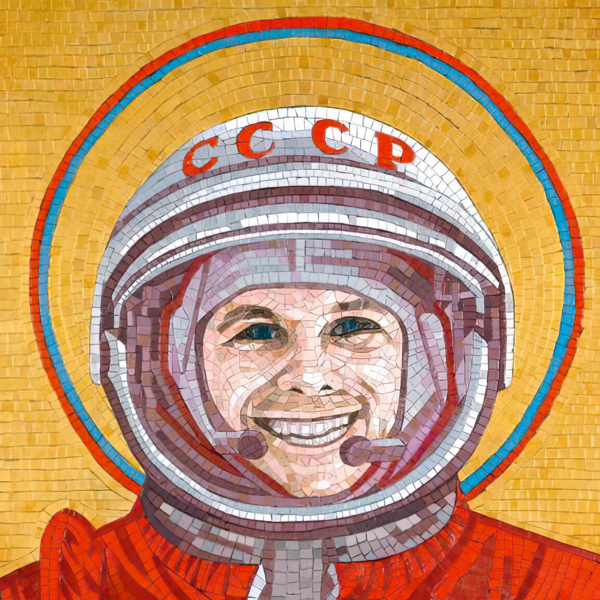


The USSR had steady and consistent economic growth, and provided free, high quality education and healthcare, full employment, cheap or free housing, and fantastic infrastructure and city planning. This rapid development resulted in dramatic democratization of society, reduced disparity, doubling of life expectancy, tripling of functional literacy rates to 99.9%, and much more. Living in the 1930s famine would not have been good, but it was the last major famine outside of wartime because the soviets ended famine in their countries.
Literacy rates, societal guarantees in the 1936 constitution, reports on the healthcare system over time, and more are good sources for these claims.
The USSR brought dramatic democratization to society. First-hand accounts from Statesian journalist Anna Louise Strong in her book This Soviet World describe soviet elections and factory councils in action. Statesian Pat Sloan even wrote Soviet Democracy to describe in detail the system the soviets had built for curious Statesians to read about, and today we have Professor Roland Boer’s Socialism in Power: On the History and Theory of Socialist Governance to reference.
When it comes to social progressivism, the soviet union was among the best out of their peers, so instead we must look at who was actually repressed outside of the norm. In the USSR, it was the capitalist class, the kulaks, the fascists who were repressed. This is out of necessity for any socialist state. When it comes to working class freedoms, however, the soviet union represented a dramatic expansion. Soviet progressivism was documented quite well in Albert Syzmanski’s Human Rights in the Soviet Union.
The truth, when judged based on historical evidence and contextualization, is that socialism was the best thing to happen to Russia in the last few centuries, and its absence has been devastating.
Capitalism brought with it skyrocketing poverty rates, drug abuse, prostitution, homelessness, crime rates, and lowered life expectancy. An estimated 7 million people died due to the dissolution of socialism in the USSR. A return to socialism is the only path forward for the post-soviet countries.
Well there is a lot to unpack there but let’s start with that last sentence the path forward for any country should be its own to choose and overwhelmingly all countries that had communism and then left it behind haven’t wanted to get anywhere near that type of governance again, and many of them are far better off today than they were under Soviet oppression as the Soviet union was an extractive empire where their satellite countries in the eastern block had a larger population density and were by and large more educated than the average Russian, and this stayed true through the entire existence of the Soviet Union. The fact that the wealth gap on paper between the richest and poorest being as close is kind of the point as to have wealth and influence in any communist regime would not be personal wealth but the individual 's status within the regime and the perks of the job, kind of like how the President and all governors of the US, the french president, the prime minister of the UK, and most other governments give their executive leader free housing in their respective Capitals, but for communists like let’s say Ceausescu had lavish mansions built for them while their countrymen starved. For education you can see in China today or north Korea, or any other Soviet country or non democratic country without a vast amount of easily accessible mineral wealth they will educate their country and publicize it for propaganda reasons on the one hand but on the other they limit the sorts of education the average civilian has access to, in china they have a vast number of engineers and use that to great effect for their manufacturing base, while also polluting their country in a way no democratized country would permit on their soil, but china doesn’t have a lot of political science majors or those who don’t follow their groupthink, in short their people can read and have marketable skills that don’t endanger the power of the CCP, the same could be said about the Soviet union, and even there you had problems such as the belief that all life was equal and so despite oranges peing unable to grow in the Soviet union outside or climate controlled greenhouses they tried to force genetic communism to have oranges grow there and politics encroached on science leading to not much happening and a great loss of productivity. Central planning is not the best form of planning and is only good if you want to economically depress those under central planning control at best, see the current slate of dictates from the Trump whitehouse that have devastated the US economy outside of tech these last 2 years, it was a central planning style dictate without accounting for a myriad of factors or building up american production to pick up the slack instead the tariffs forced the poor to pay more while having fewer benefits and getting squeezed more and more, there are dozens of these decisions that led to major issues within the Soviet union and when it collapsed the countries under the yoke of the supreme soviet were able to better decide what they wanted their government to do, it was unstable for a bit but places like Poland and Estonia are thriving members of the EU who have no wish to follow your purity test and will continue doing their own thing so long as they are able to.
Your liberal idealism mistakes imperialist coercion for “choice” and bourgeois metrics for human progress. The USSR lifted semi-feudal societies to industrial superpower status, defeated fascism, and guaranteed work, housing, and education as right ,not commodities. Contradictions like bureaucracy or Lysenkoism were real, but Marxist-Leninists criticize these as deviations under imperialist siege, not proof of socialism’s failure. The “thriving” of post-Soviet states is measured in GDP for oligarchs and EU core capital, not working-class wellbeing: deindustrialization, demographic collapse, and dependent peripheral status followed the “shock therapy” you praise. Ceaușescu’s lavishness was denounced by Marxists as a betrayal of socialist principle, not its essence. Central planning, imperfect under blockade and scarcity, achieved historic gains without colonial plunder. Your argument conflates the degeneration of a besieged workers’ state with the emancipatory project itself. The lesson isn’t retreat to capital, but to advance the struggle with clearer theory and firmer proletarian democracy.
This is an absolute firehose of lies.
The majority of people that lived in the soviet union want it back. The establishment of socialism was done by choice, and its dissolution was devastating.
The soviet union was not an “extractive empire.” As the soviet union was not dominated by finance capital, it had no reason for doing so in the first place.
Housing was guaranteed in the soviet union, and outside of wartime the famine in the 1930s was the last major famine.
China and the DPRK are democratic, see Professor Roland Boer’s Socialism in Power: On the History and Theory of Socialist Governance. The vast majority of the people in China believe China is democratic, and China is now one of the top countries in electrification and combatting desertification. You’re relying on information from decades ago, and mind you they produced for the rest of the world. Pollution per capita based on consumption has always been far higher in western countries.
China does have tons of political science majors. In fact, you can get a degree in Marxism in China. The fact that the majority of people support the system points towards the effectiveness of said system.
The sciences absolutely flourished in the soviet union and other socialist countries. That does not mean they did not make mistakes from time to time, but the fact of the matter is that they went from semi-feudalism to space in half a century. Many incredible inventions, including the mobile phone, were first invented in the USSR.
Central planning worked incredibly well in the soviet union, and continues to work well in the PRC today (and other socialist countries). Trump making decisions is not central planning.
I recommend you start actually looking into how socialism functions, because you’ve been consistently wrong this entire thread.
Removed by mod
Regarding 1: Operation Gladio, combined with the west flooding these areas with cash during shock therapy to buy up all of the industry and thoroughly eliminating any left-wing opposition to the new imperialist plunder is why.
Regarding 2: I do understand economics, and I do know what I’m talking about here. I suggest you read Is the Red Flag Flying? Political Economy of the Soviet Union. The soviets had a socialist mode of production and distribution that resulted in tremendous economic development everywhere, and did not operate on economic extraction from member-states. In fact, the opposite of what you describe often happened, with the central soviet union helping develop underdeveloped areas.
Regarding 3: People weren’t guaranteed housing by putting them in prisons. Regarding the legal system of the USSR, I suggest you read Russian Justice. Housing was guaranteed by mass-producing housing units and strong central city planning.
Regarding 4: Nobody made the point that the name of a country determines if it is actually democratic. I’m certain that you aren’t taking scholarly sources seriously now, considering I recommended Professor Roland Boer’s Socialism in Power: On the History and Theory of Socialist Governance. Democracy in socialist countries involves a combination of electoral politics and consensus-building, called consultative democracy. It’s been different in every socialist country. I suggest you start taking your claims more seriously, right now you’re ignoring scholarly works because they disagree with you.
Regarding 5: That’s not how propaganda works. The people of China support their system because it’s genuinely democratic (see Roland Boer’s textbook), and because the CPC consistently delivers excellent results. Policy comes from the people, is refined by the CPC, then released to the public for feedback, then put into action. Overall, this system has resulted in over 90% of the population approving the government, which is shown to be consistent and accurate.
Regarding 6: Copyright does not matter, and you still haven’t addressed that socialist countries have pioneered sciences and technology. For example, China is at the forefront of nuclear technology and production.
Regarding 7: This is utter nonsense, again the USSR invented the world’s first mobile phone and cell network for it. They invented many things even without the profit motive, because the desire to improve your existing conditions continues even into socialism. In capitalism, engineers are overwhelmingly paid wages to create new things and do not recieve royalties, only the owners do, yet creation happens in both systems. Moreover, without the profit motive, products are designed to fulfill needs, not just profits, which means problems like enshittification do not happen. As for famine, central planning ended famine in countries where this was common, resulting in doubling of life expectancies:
If you aren’t going to even engage with scholarly sources proving you directly wrong, why are you responding?